The recent opening of Mall of Africa was the most successful opening that we could wish to have. We had double the anticipated number of people and retailers are extremely satisfied with a number of them reporting record sales for an opening. The spend has been directly related to the record number of visitors – it was not merely curiosity seekers, but customers taking advantage of specials. What is even better is the foot count remained high for the ensuing period after the opening.
My personal opinion is the overwhelming support for Mall of Africa is due to the fact that it is regarded as “everybody’s mall”. It carries no history and we have a wide range of support all over Gauteng. I see the mall retaining its opening success and it will maintain its status as the best mall in Africa over the long term.
How did we accomplish this?
Over the past 22 years we have developed around 21 shopping malls. The development process evolves and we try and improve the product and the way we put it together with every one. Mall of Africa is truly a significant accomplishment as we could draw on 22 years of experience.
It started with the assembly of the best professional team we were able to put together to execute a project of this nature. It was truly a collective effort with the Atterbury team.
Where to from here? We are busy with a number of other exciting projects. We recently purchased the Erasmus land in Pretoria and it is set to become Pretoria’s mini-Waterfall. A master plan for a large mixed-use scheme is in the process of development. We will be developing around 200 000 to 300 000sqm of buildings in the foreseeable future. During the first phase the retail component will be developed, followed by commercial and residential developments.
At the same time we are getting good movement on the Richmond Park land in Cape Town where we will also be developing 200 000 to 300 000sqm. Approval of the first few leases will enable us to start construction very soon.
IN addition, there are a few new projects in Johannesburg, including a mixed-use development similar to what is planned for the Erasmus land in Pretoria.
We also have a few industrial projects on the cards. Together with Old Mutual we will be developing an industrial park called Old Mint Industrial next to the mint on the N1 between Johannesburg and Pretoria.
Then there is the Rand Park industrial development on the N3 near Germiston, where we are ready to break ground on another 100 000sqm of industrial land.
Further afield we have our new retail portfolios in Cyprus and Serbia and there are other greenfield developments on the cards in Europe. A lot to be excited about and a lot to keep the team busy… here as well as in Europe!
Mall of Africa’s launch was a spectacular milestone for Atterbury. More than 122 000 people flocked to come experience the largest mall yet built in a single phase in South Africa. From crazy opening specials that saw people queue in long lines to score a R7 000 TV for R4 000, to a rush on the new 3D Imax theatre the opening weekend was a dramatic and exciting event. We spoke to PR specialist Vanessa Fourie from Purple Plumm for the view from the inside
What was the biggest surprise for centre management on opening day?
We expected to be busy on opening day, however did not anticipate that many customers! We had 16 108 cars going through the parking system! The excitement and the traffic from people who travelled long distances to come see the mall was indeed a surprise, especially for a Thursday.
If you could have opening day over, would you do anything differently?
Bring Joburg traffic to a standstill again!
Do you know how many opening parties there were in total between all the tenants?
Some tenants opted not to have their opening functions on the day the mall opened. On opening day the majority of our tenants had various activations taking place inside their stores.
Which store opening promotions were most successful?
As always electronics and fashion promotions did extremely well.
It’s been a month now… have things settled down a bit?
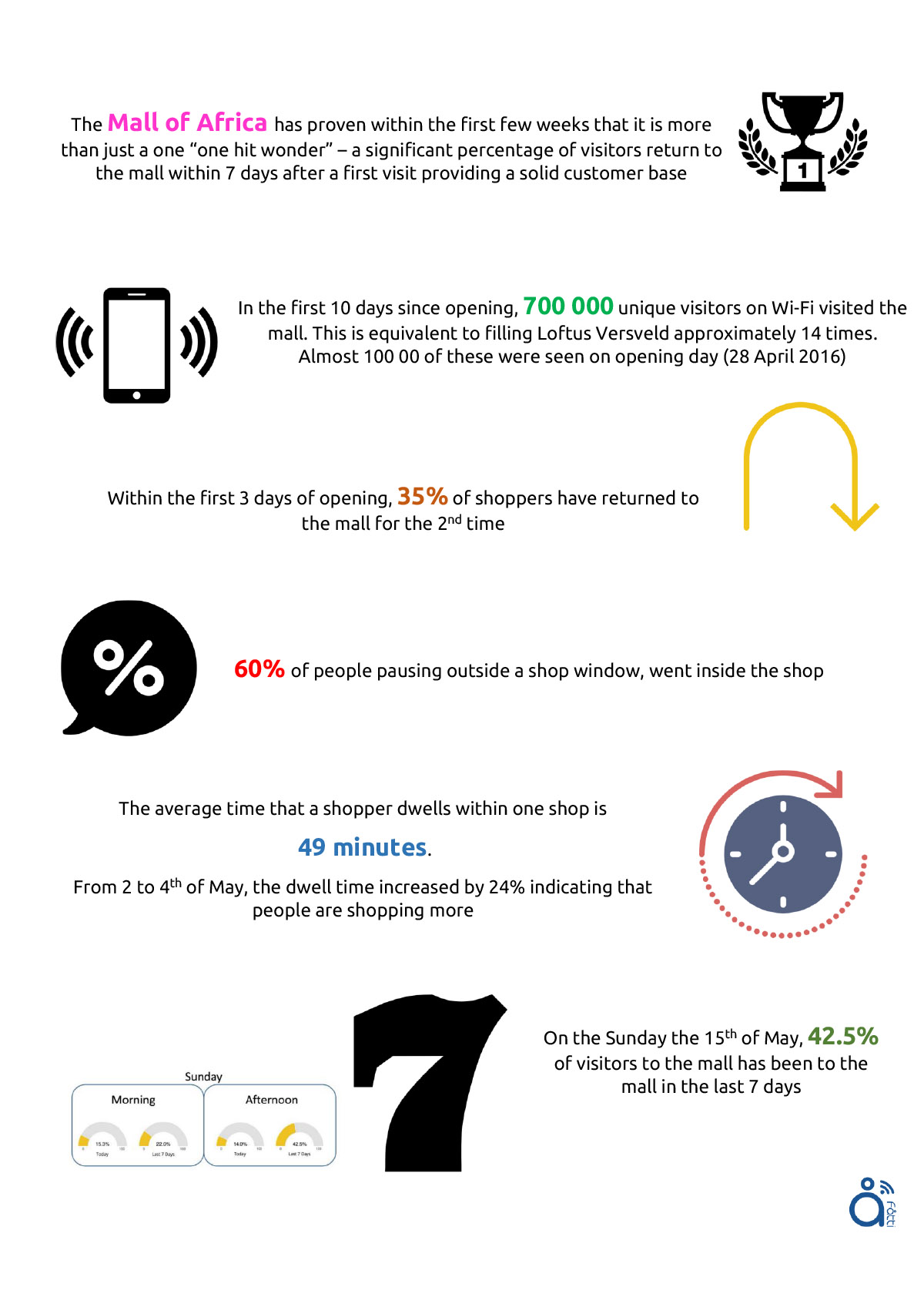
Things are starting to calm down a little, however the mall is still extremely busy over the weekends. What is also very encouraging, is the number of return visitors to the mall. Initial stats indicate that as much as 42.5% visitors return over a two week period.
Excluding opening weekend, what day has been the busiest?
Saturday 7 May was the busiest so far, with 68 922 people through the doors.
With such a busy mall, the Lost and Found office must be full of interesting things… what is currently in there?
Yes, people do mislay things while shopping… We have items like ID books, driver’s licences and bank cards.
People seem confused by the parking. What are your best parking tips when coming to the MoA?
The parkades are spread right around the mall and are identified by letters and numbering per parkade, so it’s important to take note of those where you park. What we would urge customers to do is to take note of the entrance numbers as well.
What is the best feedback you’ve received so far?
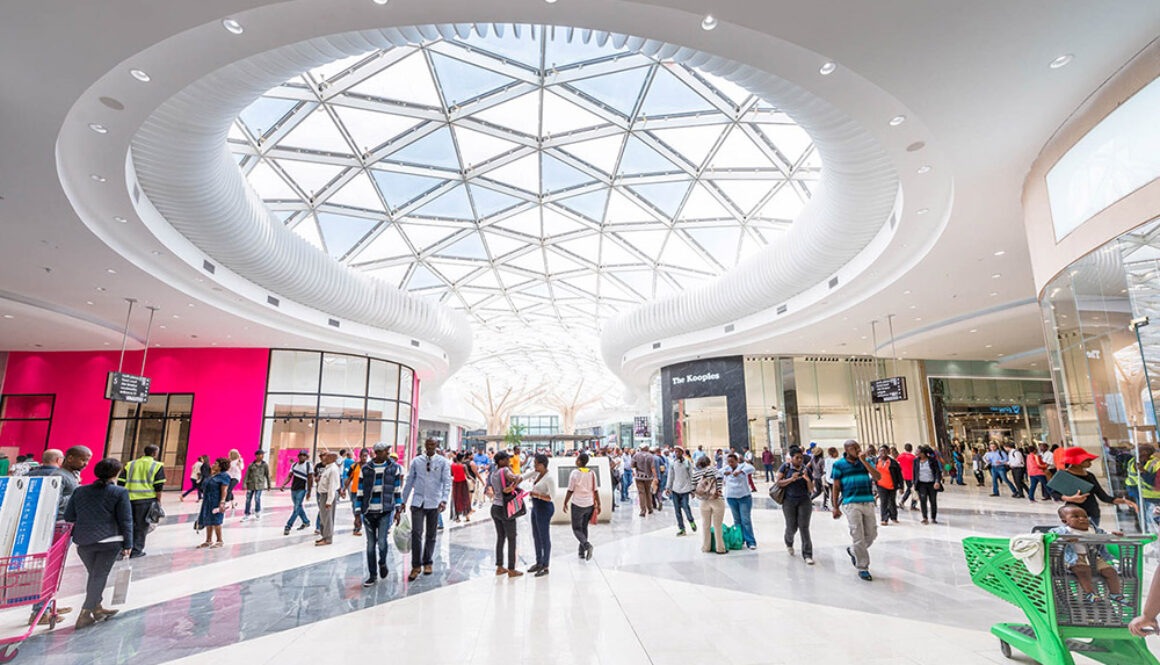
People are very taken by the design of the mall, particularly the volumes – the very high ceilings and the shopfront designs. The flagship stores and new brands have also attracted a lot of positive comments.
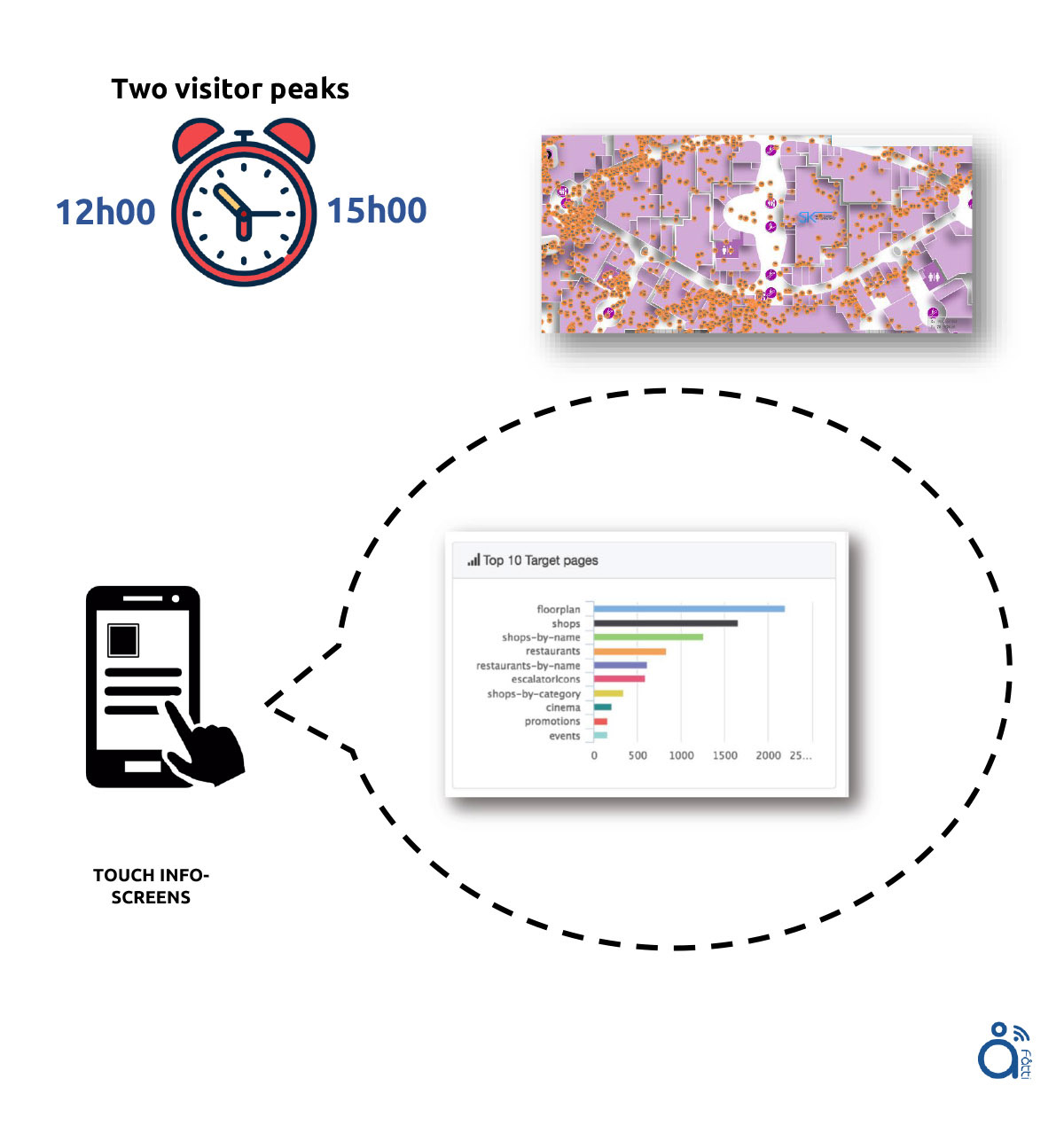
Interesting Mall of Africa facts from fatti fatti is a technology company focusing on the retail market that tells retailers what they want to know about customer behaviour.
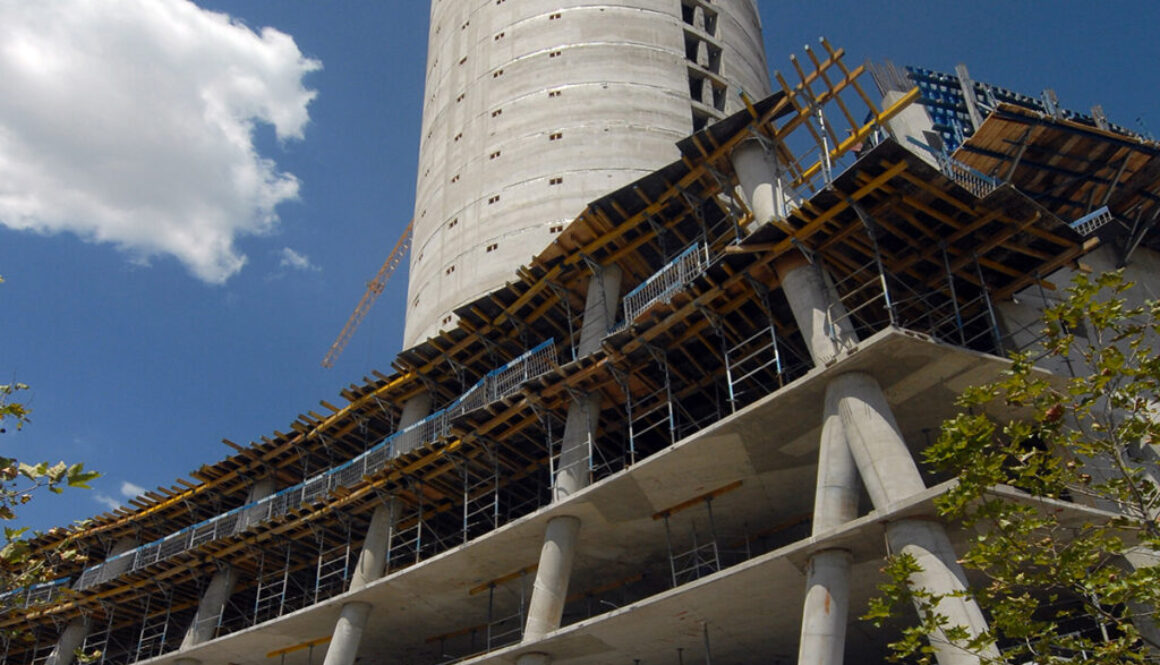
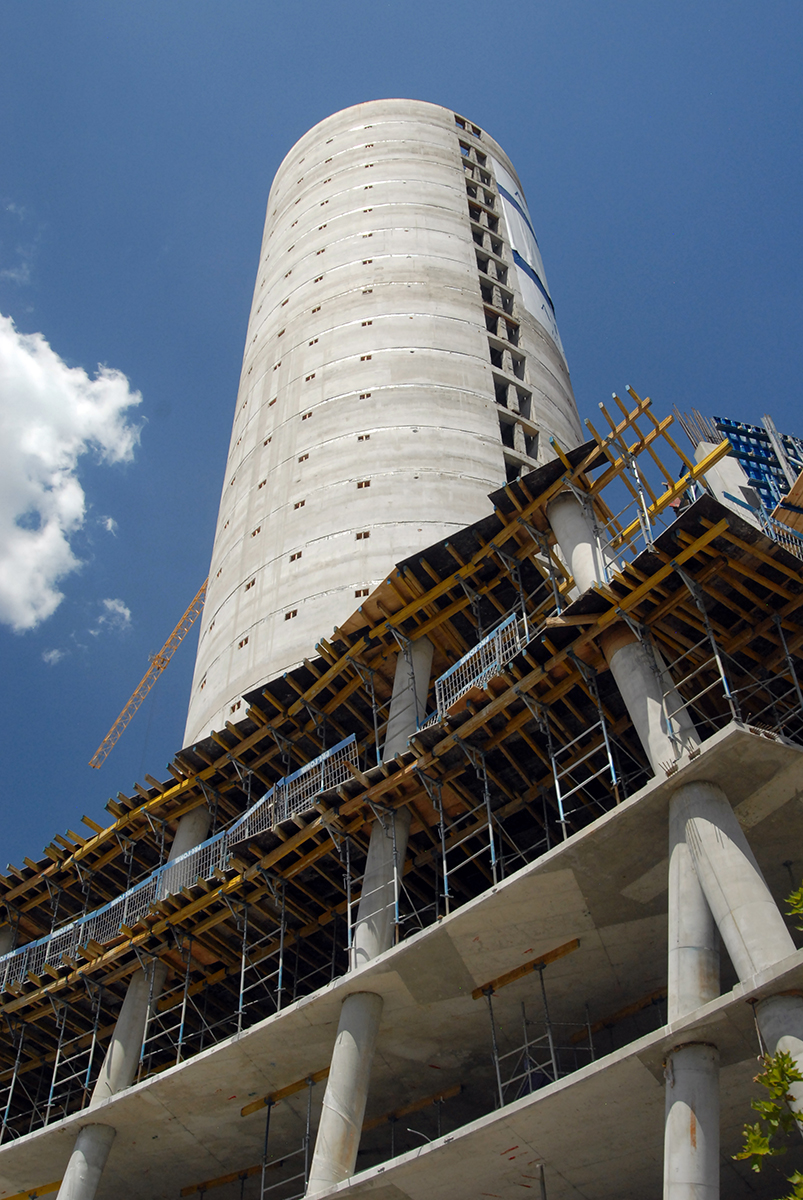
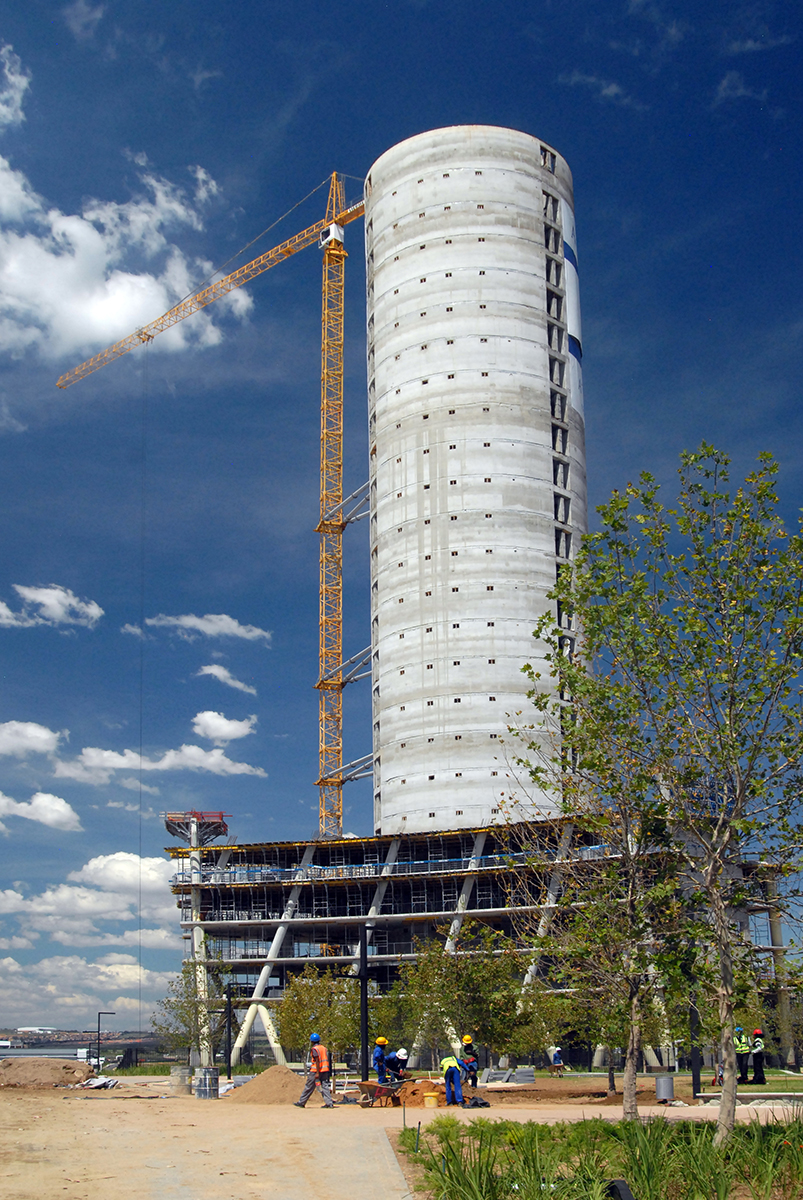
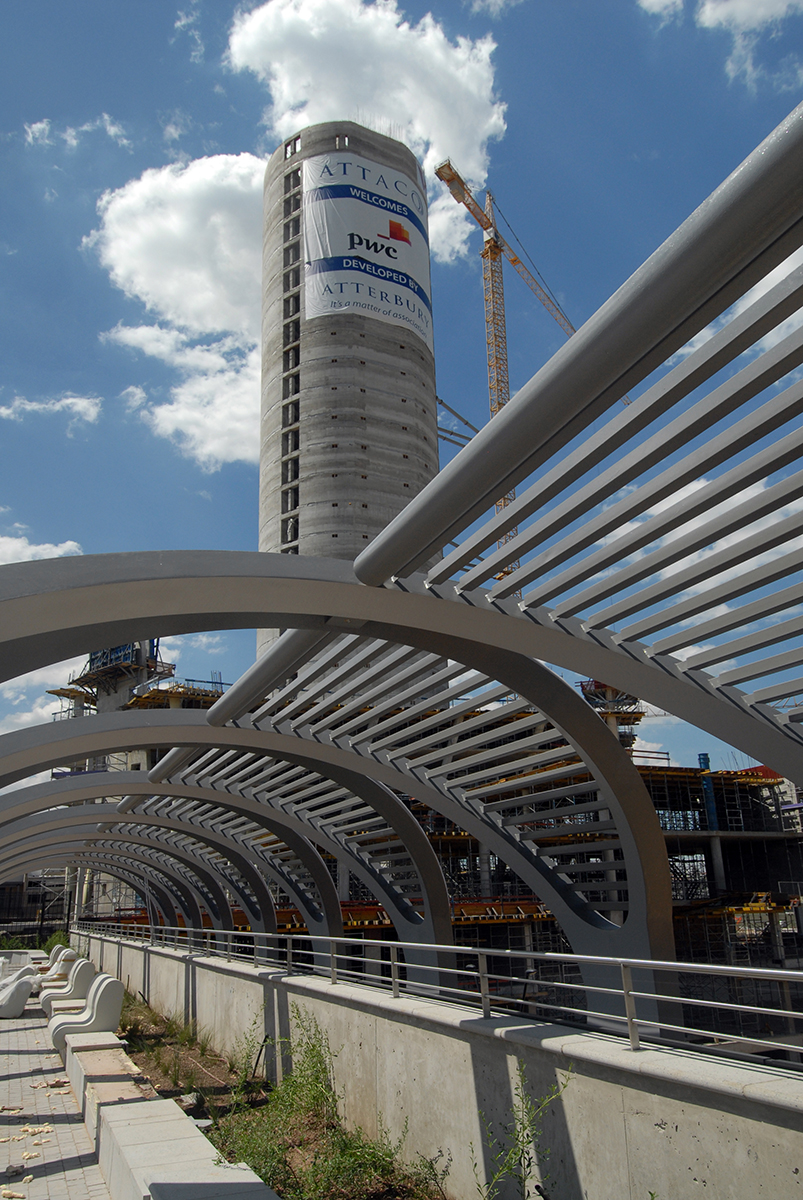
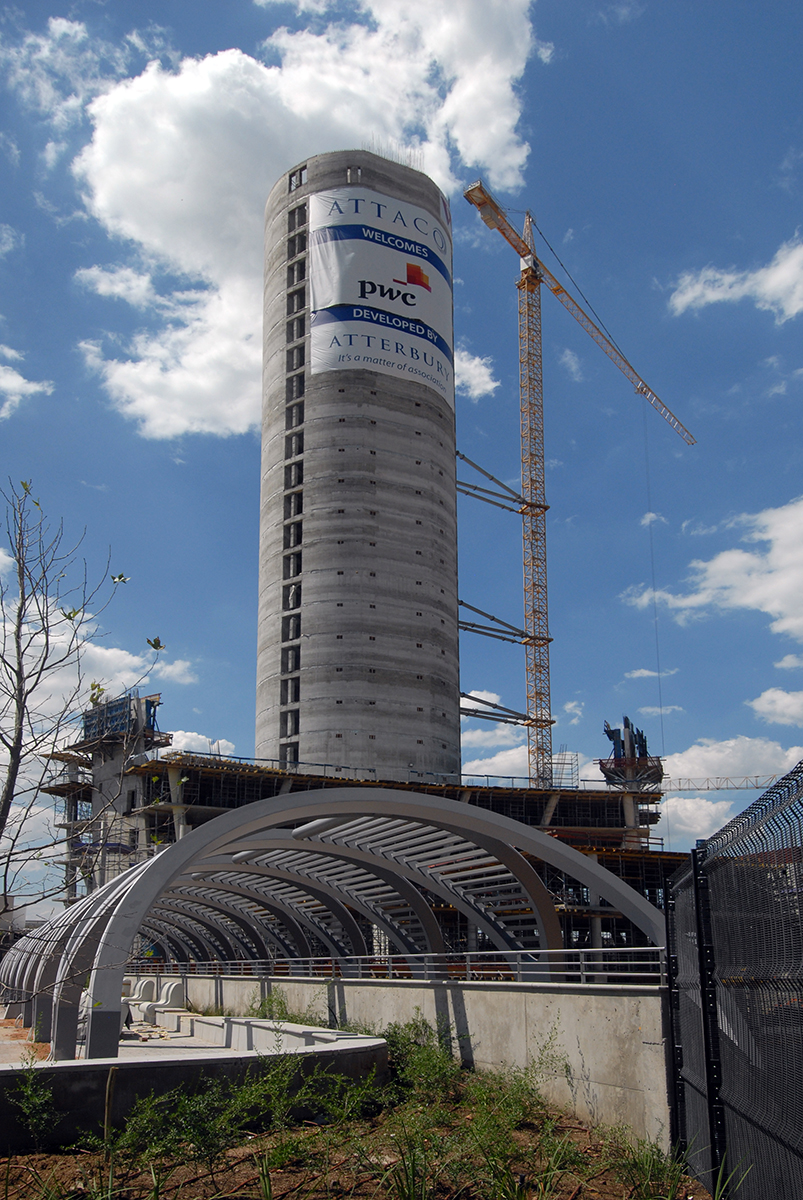
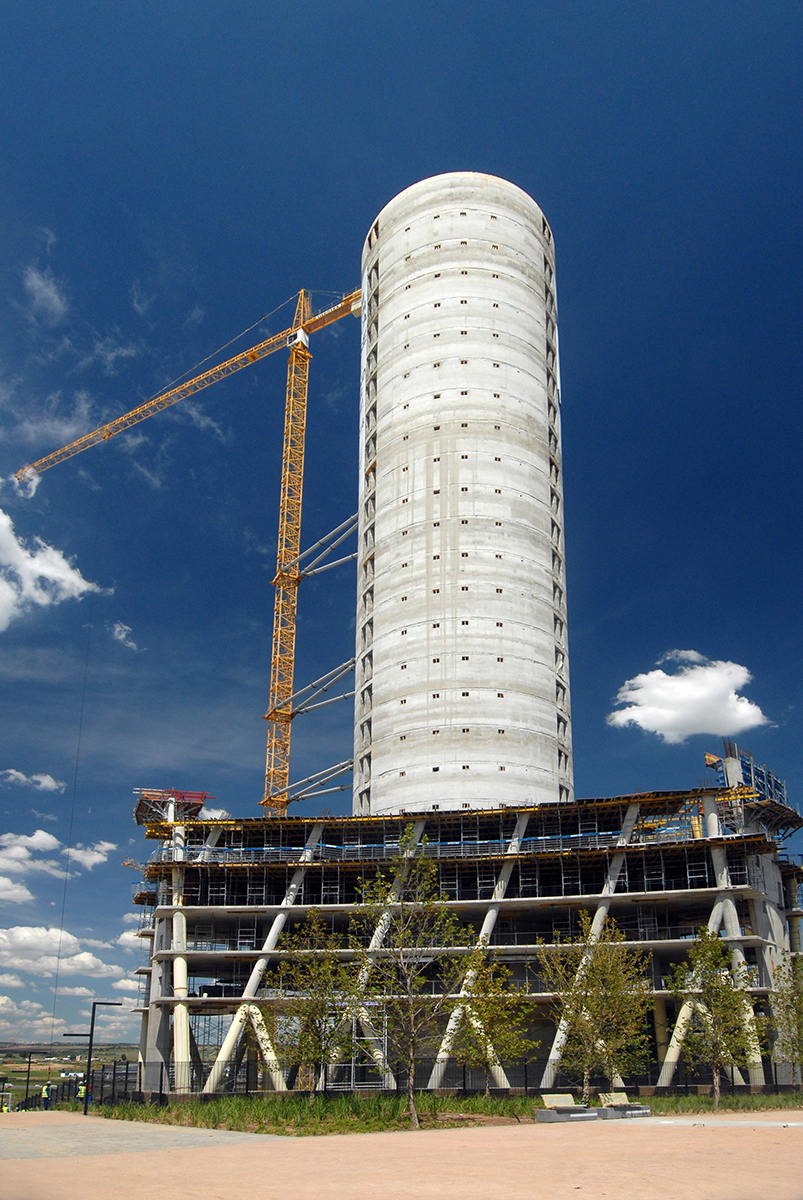
The tallest structure by far in the Waterfall and Midrand area, the new Price Waterhouse Coopers head office has sparked a lot of interest since it started rising alongside the Mall of Africa in Waterfall City. Already almost a year and a half in the making, the building is scheduled to be ready in February 2018, when 3 500 employees will move into 40 000 sqm of ultramodern offices.
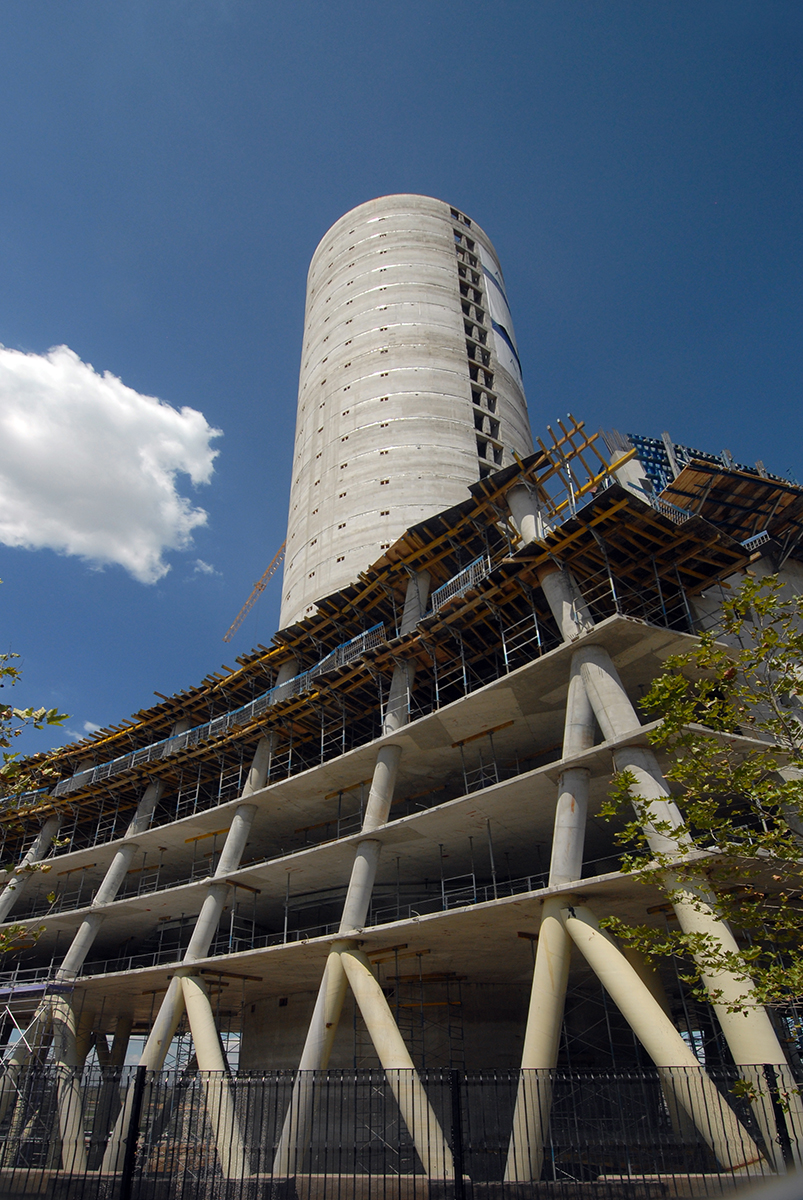
The construction process saw the core of the building going up first to the full height of the building, prompting curious early onlookers to ask the question, why is the building so thin? It is only now, as the rest of the floor space on each storey is being added from the bottom up, that a fuller picture is emerging of the silhouette of this eye-catching building, with its dramatic twist design.
The most visible part of the structure is still the core, and this central space will contain the lifts, toilets and essential services such as the water, air and electrical distribution. It also provides stiffness and strength to the building – similar to the spine and central nervous system in the human body.
According to structural engineer Richard Lawson from Arup, the core of the building was constructed using a method called slip forming, where the concrete is poured continuously within the steel shutters, which moved up at a pace of 2.5m a day. By erecting the core in one operation early in the project, he explains, it speeds up construction of the rest of the building, since you can then just build the floors and columns, rather than waiting for construction of the walls. It also allows more time to install the lifts and central services. Internationally this construction method is relatively common for buildings over ten storeys, but in South Africa it has most recently only been used for forming chimneys and cooling towers.
The spiralling geometry of the building creates unusual forces on the tower. “Rather than putting all of this load on the central core which would be very inefficient, we sloped the columns along the façade of the building in the opposite direction,” explains Lawson. “This generates two twisting forces, which cancel each other out. We reviewed many iterations to get the optimal balance and to ensure that this was closely coordinated with the overall geometry and the façade design.”
In a building this tall, the lift system also takes special consideration. According to electrical engineer Harry Meyer of CAI, the tower is one of the tallest buildings recently to be constructed in South Africa, and unique in that the vertical transportation system provided had to be designed to travel the full 25 floors.
The power required for the nine lifts were originally specified by Schindler to be around 1MW, which is enough electricity to power around 1 000 homes… and so another solution had to be found. A visit to similar installation in Switzerland followed, and after many tests and measurements it was possible to reduce the appetite for energy to about a third of the original request. The lifts will travel at six metres per second, which will be a first for South Africa, says Meyer.
And while the lifts will efficiently do its work unseen inside the core, the unique façade of the building will be creating first impressions on the outside. After months of design, procurement and fabrication, the subcontractor Geustyn & Horak has just started installing the glazed façade. The 3D geometry and unique aluminium profiles were developed by Arup and then had to be moved between Johannesburg, Bloemfontein, and back to Midrand for each of the processes required to complete them into story-height frames that are installed on site. The frames are warped to accommodate the twisting imposed by the rotation of each floor relative to the floor below.
Says Arup’s John Abbot, “We believe that this is the first curtain wall in South Africa with twisted unitised panels. The glass was bonded to the frames in G&H’s Johannesburg factory and the complete units hoisted into position on site. When installed they couple together with gaskets and are immediately weathertight without the need for external access to seal the joints.” The vision glass is high performance double glazing using imported soft-coated glass, processed by C&C Safety Glass in Johannesburg.
The first three units were installed on 21 April. At the end of the floor the panels slope backward and this changes with each panel until at the other end of the floor the panels slope forwards by the same amount.
Developed by leading South African property developer and investor Atterbury, the landmark new Mall of Africa will open up a whole new world of shopping and entertainment when it opens its doors next week, on 28 April 2016.
With a choice of 300-plus stores, restaurants, entertainment and services, and the very latest in mall design, Mall of Africa in Waterfall, Midrand, will set a new benchmark for shopping centres on the continent, and create an unmatched, unmissable shopping experience.
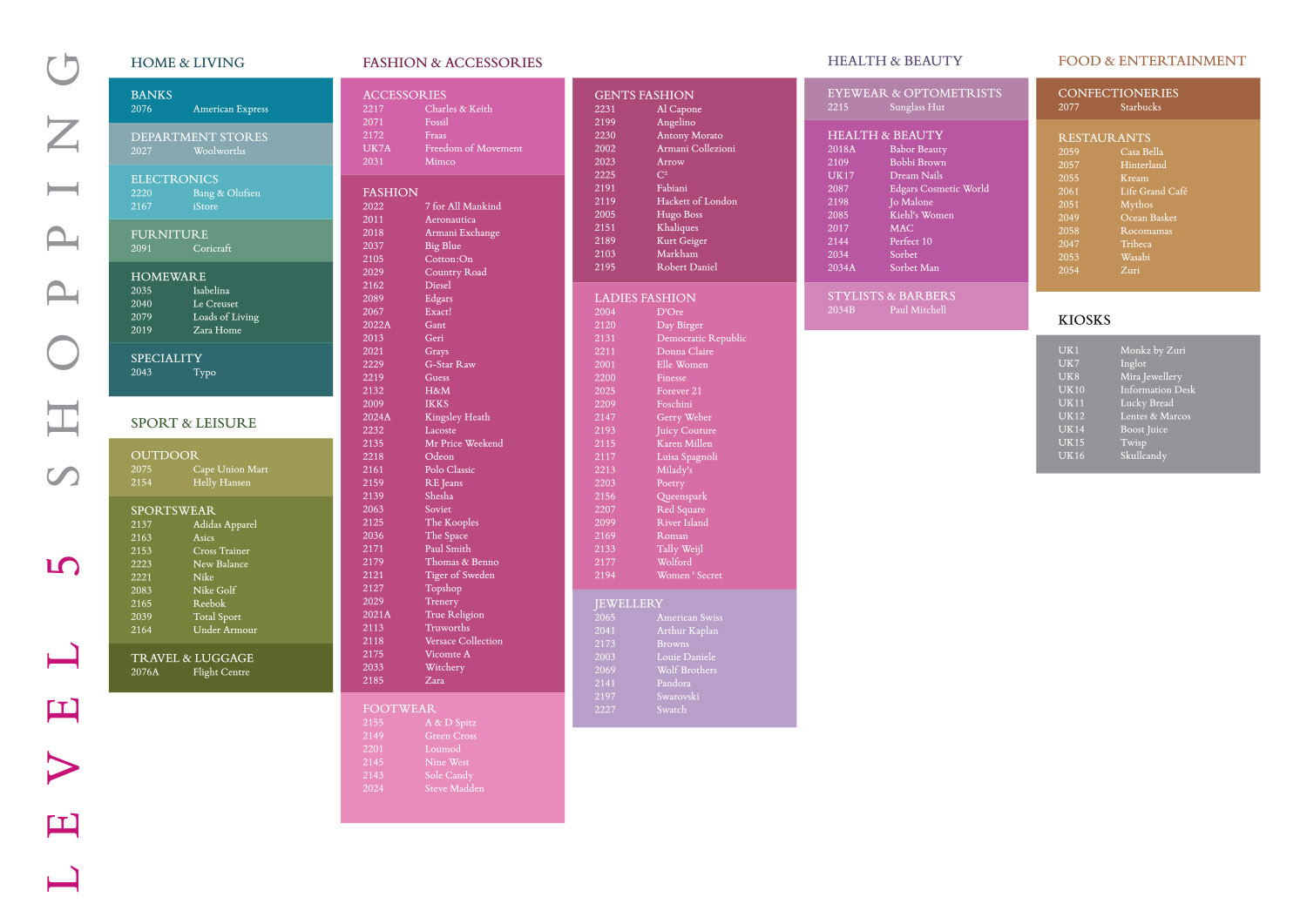
Shoppers will be spoilt for choice at the new Mall of Africa with a full spectrum of sought-after retail brands — from Armani to Zara, and everything wonderful in between.
Commenting on the development, Louis van der Watt, CEO of Atterbury says: “The Mall of Africa has been designed and developed by Africans and stands proud with leading international retail centres globally. We have created a new shopping experience unlike anywhere else, in which every detail of the mall caters towards understanding and delighting customers.”
Southern Africa’s largest single-phase shopping centre development to date, the R5-billion Mall of Africa, is a 130,000sqm super-regional mall. It is co-owned by two leading South African property companies. JSE-listed real estate capital growth fund Attacq Limited holds the commercial development rights to Waterfall and owns 80% of the Mall of Africa. Atterbury Property Developments owns 20% of Mall of Africa and is responsible for the Mall of Africa development project, on behalf of Attacq. Atterbury Asset Managers undertakes Mall of Africa’s asset management for its co-owners.
The retail mix for the super-regional Mall of Africa features a substantial offering of South Africa’s most popular retailers with five anchor tenants. It also hosts an exciting line-up of international fashion retailers. Anchor tenants at Mall of Africa include Checkers, Edgars, Game, Woolworths and Ster Kinekor. They will be joined by leading South African brands from The Foschini Group, Mr Price, and Truworths.
Top international brands opening their first stores in South Africa at Mall of Africa include Armani Exchange, Helly Hansen, Asics, Zara Home, The Kooples, Under Armour, Women’secret and Soap Stories.
These new retailers opening in the country for the first time will join a full pack of flagship stores from favourite brands like H&M, Forever 21, Forever New, River Island, Mango, Cotton On, Starbucks, Versace and Zara.
Cobus van Heerden of Atterbury Property Developments says: “The diverse mix of local and international brands work in synergy with independent boutique stores to round off a world-class, modern shopping experience that will delight even the most brand and fashion conscious shoppers.”
Mall of Africa’s strong fashion component will be bolstered by a full complement of banks, cell phone and tech stores, an array of health and beauty outlets, home and décor stores, as well as a cinema complex. The mall will also feature a unique town square overlooking a lush green park with an excellent mix of restaurants and fast food outlets to cater for every taste.
He adds: “We have worked hard to ensure an exceptional shopping experience for customers that will attract discerning shoppers from our local community at Waterfall, across South Africa and all corners of the African continent.”
True to its name, Mall of Africa’s architectural form, designed by MDS Architects, is inspired by the geological beauty the contenting but also leading trends in design element and customer flows – all making for an exceptional shopping experience.
Using natural elements like wood, stone, glass and concrete, the mall’s centre court takes inspiration from the forests of central Africa. Its further four courts reflect the four points of the compass on the African continent: the great lakes in the east, the oil and trade of the west, the sand of the North African desert and the mineral wealth of southern Africa.
Besides Atterbury’s development of Mall of Africa offering jaw-dropping retail variety, it also creates a magnificent shopping and entertainment setting, under a single breath-taking roof, driven by the project’s exceptional development, architecture and leasing expertise.
“The Mall of Africa boasts spacious mall widths and high shop fronts featuring a wide-ranging line-up of the best retail on offer, all showcased with lots of natural light,” says van Heerden. “The design combines international standards with contemporary architectural expressions, so in addition to being truly beautiful, it is also easy and enjoyable for shoppers to navigate.”
Not only is it effortless to move around the mall, but it is also simple to get to the mall. Mall of Africa is superbly situated in Waterfall City, halfway between Johannesburg and Pretoria. It is highly accessible, located adjacent to the Allandale Road exit off the N1 Highway, the first free-flow intersection of its size in Africa. Plus, Atterbury has undertaken major roads upgrades around the development to make it easy for shoppers to arrive at Mall of Africa’s 26 entrances.
Nine state-of-the-art cinemas – including IMAX and Cine Prestige will bring great movie moments to the greater Waterfall and Midrand community.
The communities of Waterfall, Midrand and surrounding areas are looking forward to experiencing the new, state-of-the-art Ster-Kinekor cinema complex, which opens up its screens to the public on Thursday, 28 April. The 1 122-seater complex, situated within the exciting new Mall of Africa in Waterfall City, boasts an immersive IMAX® 3D theatre, two luxurious Cine Prestige 3D cinemas with their own VIP Lounge area with exclusive catering offers, and a further six cinemas, two of which are 3D-ready.
Says Bradley Knowles, General Manager Marketing for Ster-Kinekor Theatres: “The prime position of the Mall of Africa complex offers us an exciting new market of movie lovers to share ‘great moments’ with. Whether you are part of the movie playing on the massive IMAX screen or laid-back and relaxed in Cine Prestige, the magic of the big-screen cinema experience is unique. With the latest blockbusters releasing each week and nine new state-of-the-art cinemas in which to enjoy them, we know our audiences who share a ‘great moment’ with Ster-Kinekor, will be back for many more!
“We are thrilled to be opening this cinema with our long-term partners Atterbury. After the successful opening of our theatre complex at Sterland and more recently the cinema complex at Newtown Junction and the thriving complex at The Grove Mall of Namibia in Windhoek, we are very excited to launch another entertainment offering that we believe will certainly contribute to an influx of customers. Together we understand that people demand high-quality entertainment and that a great night out at the movies is a firm favourite for everyone! We look forward to furthering our relationship with Atterbury with the expansion of more cinema complexes inside and outside SA borders,” says Knowles.
On opening day the complex will screen the latest blockbusters including the highly anticipated IMAX 3D release of Captain America: Civil War, Huntsman: The Winter’s War, Barbershop, Disney’s The Jungle Book, Ratchet & Clank in 3D and The Forest.
Developed on a scale beyond anything the country has known by leading South African property developer and investor Atterbury, the iconic new Mall of Africa is set to open in less than a month, on 28 April 2016.
Southern Africa’s largest single-phase shopping centre development to date, the R5-billion Mall of Africa, is a 130,000sqm super-regional mall that sets a new benchmark for shopping centres on the continent.
Commenting on the Mall of Africa development, Louis van der Watt, CEO of Atterbury says: “In line with the Atterbury vision to create working, shopping and entertainment spaces for everyone to live to their full potential, the development of this breath-taking shopping and leisure destination introduces an unmissable, unmatched retail experience. Mall of Africa’s exceptional scale, design, location and retail mix places it at the forefront of development.”
Van der Watt adds: “The development has enhanced the diversity of the retail sector in South Africa, changed Gauteng’s skyline and stimulated the economy.”
Mall of Africa is co-owned by two leading South African property companies. JSE-listed real estate capital growth fund Attacq Limited holds the commercial development rights to Waterfall and owns 80% of the Mall of Africa. Atterbury Property Developments owns 20% of Mall of Africa and is responsible for the Mall of Africa development project, on behalf of Attacq.
At 130,000sqm, it is the largest single-phase shopping mall development in South Africa. Mall of Africa will feature over 300 retailers, restaurants, entertainment and services, all within a single exceptional development. It also has all amenities that any shopper may need. Atterbury Asset Managers is responsible for Mall of Africa’s asset management for its co-owners.
Atterbury began the construction of Mall of Africa nearly three-and-a-half years ago, on 28 October 2012.
While the mall comprises some 130,000sqm of gross lettable area, James Ehlers, MD of Atterbury Property Developments, notes its construction area covers a massive 550,000sqms – or 78 rugby fields. A stroll around the building’s perimeter will take you on a walk of 1.75 kilometres.
Ehlers also reveals that over 6 kilometres of shopfront has been created inside Mall of Africa. Plus, more than 530 kilometres of post tension cable has been used in its construction, as well as 18,500 tons of rebar and 205,000 cubic metres of concrete.
During the construction of Mall of Africa a substantial 3,078 people were employed for the project and, by January 2016, they had worked 10.41-million man hours.
“When the centre opens, hundreds of permanent and part-time jobs within the centre will be created on a sustainable basis,” says Ehlers.
A mall of the magnitude of Mall of Africa has massive pulling power for shoppers in the region and beyond, driven by its distinctive retail experience across two levels of exceptional shopping.
Lucille Louw, MD of Atterbury Asset Managers, confirms Mall of Africa will open with seven anchor tenants, and an exciting array of international retailers that have chosen to debut their brands to South Africans at the mall, as well as an appealing line-up of flagship stores for all major South African retailers.
“Mall of Africa’s carefully considered retail mix creates a unique experience that is a major attraction. It offers a well-balanced variety of local and international brands, services, speciality shopping, entertainment and eateries. There will be something for everyone, with 2.4 kilometres of shopping and an exciting selection of 300-plus stores,” says Louw.
Anchor tenants at Mall of Africa include Checkers, Edgars, Game and Woolworths. They will be joined by leading South African brands from The Foschini Group, Mr Price and Truworths.
Louw reveals that top international brands opening their first stores in South Africa at Mall of Africa include Armani Exchange, Helly Hansen, Asics, Zara Home, The Kooples, Under Armour, Mango Man, women’secret and Amsterdam-based Soap Stories.
These new retailers opening in the country for the first time will join a full pack of favourite brands like H&M, Forever 21, Forever New, River Island, Mango, Starbucks and Versace.
Louw adds: “In addition to its exciting shopping appeal, Mall of Africa also includes endless entertainment. Customers can enjoy a state-of-the-art nine-screen Ster Kinekor cinema complex with Imax, and an extensive selection of 12 restaurants, fast food stores, coffee shops and cafés.”
One of the many leisure highlights at Mall of Africa is a magnificent outdoor park with a children’s play area featuring an interactive musical water fountain.
A major benefit of Mall of Africa is its central location in Gauteng and easy access from all areas. Mall of Africa is superbly situated in Waterfall City, halfway between Johannesburg and Pretoria. It is highly accessible, located adjacent to the Allandale Road exit of the N1 Highway, the first free-flow intersection of its size in Africa. Plus, Atterbury has undertaken major roads upgrades around the development to make it easy for shoppers to arrive at Mall of Africa’s 26 entrances.
The mall has around 6,500 parking bays, most of which are under cover. It also offers valet parking, special drop-off facilities for buses and dedicated Uber pick-up and drop-off points – a first in the South African retail environment. It is also minutes away from the Gautrain Midrand Station.
While Mall of Africa is set to dazzle both locals and visitors from far and wide, there is much more to this ground-breaking development than first meets the eye.
Cobus van Heerden of Atterbury Property Developments comments: “Our commitment to responsible development, energy efficiency, sustainability and the implementation of green strategies is evident in Mall of Africa’s inspired design, construction and operational practices. As a developer, it is crucial to ensure the assets we create are environmentally responsible and as energy efficient as possible.”
The project implemented multiple green technologies, including a massive photovoltaic installation on the roof of Mall of Africa. The installation will be the largest in South Africa and Africa and will provide 4.8MVA of sustainable power for the centre. The mall will use grey water harvesting in all public toilets and for the irrigation of the entire development. Its design means natural light is maximized in the mall in such a way that shopper comfort is also optimised.
Van Heerden says: “Atterbury’s vision was to develop the highest quality retail property that offers an exceptional overall shopping experience and is a real asset to its owners, retailers and customers. We are excited this is now becoming a reality and can’t wait to share the Mall of Africa experience with everyone when it opens on 28 April.”
Atterbury has joined forces with local developer Safland Property Group in Namibia to develop Walvis Bay’s biggest mall to date. Atterbury’s Wiehan Strydom gives some background
Originally Dunes Mall would have been a 100% Atterbury development, now it’s a joint venture. Why did the plans change?
This is not the first time that Atterbury and Safland partnered as we did the same with the Grove Mall of Namibia in Windhoek. We regard Walvis Bay as a rapidly growing market but it is currently still too small to justify two competing malls, both with a shopping area greater than 20 000m². Deciding between the two development sites was more difficult but the Atterbury site was chosen due to its greater size that would allow for more future expansion to the mall.
How is Dunes Mall one similar to The Grove?
Apart from the fact that this mall is only 27 000m² versus The Grove’s 45 000, the main difference is that the Dunes Mall will only be on one level. The quality of the mall finishes in terms of look and feel will be the same, as it is our trademark to develop only high-quality retail.
What does the retail landscape in Walvis Bay look like and how will Dunes Mall change that?
Most of what’s there is still the typical in-town, on-street retail. There is no existing regional-size shopping centre in Walvis Bay. We believe that the mall will attract shoppers from a larger area, who would previously have gone to Windhoek to shop for things like fashion, electronics and so on.
What is Dune Mall’s vital statistics?
The mall size is 27 000m², the development value is around $N650 million at the opening date, there will be around 80 stores and around 1 040 parking bays.
Construction started at the end of 2015 with completion by 2017 – how far along is the process and what is currently happening on the site?
We are four months in, so at the moment we are moving around 185 000 cubic meters of dune sand to create the platform for the construction of the mall, which will commence in May 2016.
Are there particular challenges involved in developing a new mall in Walvis Bay? Does the location on the coast impact in any way?
There have been the normal challenges faced by developers to complete the red tape of sub-divisions, rezoning and so on. Walvis Bay is probably the most corrosive town in the world with the combination of desert sand and mist from the sea. Therefore particular attention must be given to corrosion-resistant materials to ensure longevity of the mall and reduced maintenance cost. Also, the elements of wind (sandstorms) and mist need to be taken into account in the design.
We heard that the parking bays are wider than standard to accommodate Walvis Bay’s SUV culture. Is that true?
Correct, there are huge numbers of local people and tourists who use 4x4s as standard transport, therefore the increased parking size. It is also to accommodate moms with little kids, making it easier to get in and out of the vehicles.
[fusion_builder_container hundred_percent=”yes” overflow=”visible”][fusion_builder_row][fusion_builder_column type=”1_1″ background_position=”left top” background_color=”” border_size=”” border_color=”” border_style=”solid” spacing=”yes” background_image=”” background_repeat=”no-repeat” padding=”” margin_top=”0px” margin_bottom=”0px” class=”” id=”” animation_type=”” animation_speed=”0.3″ animation_direction=”left” hide_on_mobile=”no” center_content=”no” min_height=”none”][fusion_text]A new industrial and business park development of R850 million will soon be rising at Gosforth Park, in Germiston. We spoke to Gerhard van der Westhuizen from Atterbury Property Developments to get the lay of the land…
How does Apex Industrial Park compare to other industrial developments in the Atterbury portfolio, such as Richmond Park down in Cape Town?
Apex is not the biggest development we’ve tackled and it’s only about half the size of Richmond Park, but it is extremely well situated in terms of our objectives. At around 23 hectares it is about the same as other Atterbury industrial developments such as Waterfall Distribution Campus and Waterfall commercial district.
What makes the location so beneficial?
It is right on the N3, N12 and the N17, three of the busiest thoroughfares for freight traffic in the country, on the main routes between Gauteng, Mpumalanga, North West and KZN, so it’s really central in terms of the distribution of goods. It is just a couple of kilometres from Rand Airport and the site also has the benefit of excellent visibility, so it will advertise itself.
What exactly is planned for the site?
It will be mainly large distribution warehouses, but we have concept plans for other elements such as a small retail component, some drive-thru fast food outlets, office space and possibly a hotel.
When you mix business and industrial, what are the most important considerations when it comes to planning?
Location and accessibility really are the most important consideration, as well as visibility, and we have all those covered.
What do the timelines look like for completion? In a mall you wait until the whole complex is finished before you allow tenants to start trading; is it different with an industrial park?
This whole project is tenant driven – we build according to what tenants require, so building usually only happens once a deal is signed with a tenant. We normally don’t put up warehouses on spec. We’ll be ready to start building around August – by then all local authority approvals and permissions should be in place. Tenants take delivery of their buildings for trading and operational purposes as soon as we’ve completed them, so it is different to a mall, yes. That’s also why it’s difficult to give a date for final completion, though we hope to be fully let and developed by 2019.
Does Atterbury have a bigger strategy regarding industrial developments – can we expect to see more of these deals being signed in the near future?
We really respond to market demand, and currently there is quite a lot of opportunity in the industrial sector, which is why this is the space we are playing in right now. We just signed a deal for a massive, 85 hectare site in Erasmuspark, between Pretoria and Centurion, which will be the next big thing… that development could ultimately be worth as much as R8 billion, so watch this space.[/fusion_text][fusion_text]
Under construction – A tale of 2 developments
We compare Atterbury’s two current industrial developments, Apex Industrial Park and Richmond Park, in numbers.[/fusion_text][fusion_text]
Apex Industrial Park
Richmond Park
Total development cost
R850m
R3 billion
Total size
110 000m²
300 000m²
Proximity to an airport
2km from Rand Airport
19km to Cape Town International airport
(plus 17 km to Cape Town harbour!)
The countdown to Mall of Africa’s opening has begun in earnest, with under two months left to go. And while the tenants are fitting their stores and the developing teams are completing the final touches, the marketing campaign is also being planned with painstaking attention to detail. Vanessa Fourie from the brand communications company Purple Plumm shared some intel…
What is planned for the opening?
Retailers are doing a lot of advertising, and we work with the tenants to make sure we reach their target markets. What is particularly exciting is that there are a number of stores that are making their South African debut in Mall of Africa, such as Starbucks, Zara Home and the French clothing brand The Kooples, and they are all doing big PR and advertising drives along with all the other local and international tenants, from Forever 21, H&M, Hamleys, River Island, Versace, Woolworths, Mr Price, the Foschini Group, Imax, Edgars and more; we are supporting all of these opening efforts.
Do you have a particular strategy?
We are focusing on knowledge and experience… This mall is so massive, it is potentially overwhelming for a shopper, so we are focusing on empowering messaging: from how to drive there, where to park to get to the shop you want easily, introducing what shops there are. We are also targeting specific messages at different personas or categories of shoppers, such as residents of the surrounding development, mothers, office workers… We want these diverse groups to all have an equally satisfying experience at the mall, so we are training brand ambassadors who will be on hand on the ground to help the shoppers find what they’re looking for. Customer service training is being done on all levels from the parking and security staff to the management team, to ensure that the shopping experience at Mall of Africa will be pleasurable.
How will you get the messages across?
We are extremely excited about the Mall of Africa magazine, which is being published by Ndalo Media, who also do Destiny and Sawubona. This will be a high-gloss quarterly title, of which 50 000 copies will be distributed, also in the residential estates in the precinct. It will offer the tenants a platform for crossmarketing. The magazine is being launched to coincide with the opening of the mall on Thursday, 28 April 2016.
We’re also targeting the shoppers in the various categories with a persona-focused campaign to help each segment understand what there is for them; and this will run on social media, and on a dedicated microsite.
Any other tricks up your sleeves?
We’ve negotiated with the ride-share app Uber to have a dedicated, branded Uber dropoff and collection point, which is a first for South African malls. This will enhance the Uber experience and adds to the ease of navigation that we want for our shoppers. There will also be a big opening campaign that will offer free Uber rides under a refer-a-friend promotion.
What is your mantra for the opening and beyond?
First first first! We believe it is extremely important that the shopper’s first experience of Mall of Africa is a good one, we want to touch the shoppers, and get it right the first time. The mall will be equipped with FATTi and other analytics technology that will be used to monitor and evaluate the shopping patterns of the different groups so that we understand the individuals in real time, and can provide the best experience possible.
Get your head around these numbers! • 26 different entrances offer access to the Mall of Africa
• 40 escalators in the Mall and within tenant stores
• 49 sets of lifts and hoists
• 256 stores, with four anchor tenants
• 1 750m – the perimeter of the building
• 6 000m – total length of the shopfronts
• 6500 parking bays, the majority of which are covered, even offering a valet parking option
• 130 000m² of retail space
• Trading hours – 7 days a week, Mon to Sat 9am – 8pm, Sundays & public holidays 10am – 8pm
• 10.4 million man hours, and counting, have been worked to complete the mall
• 3 800 – job opportunities created during the construction of the mall
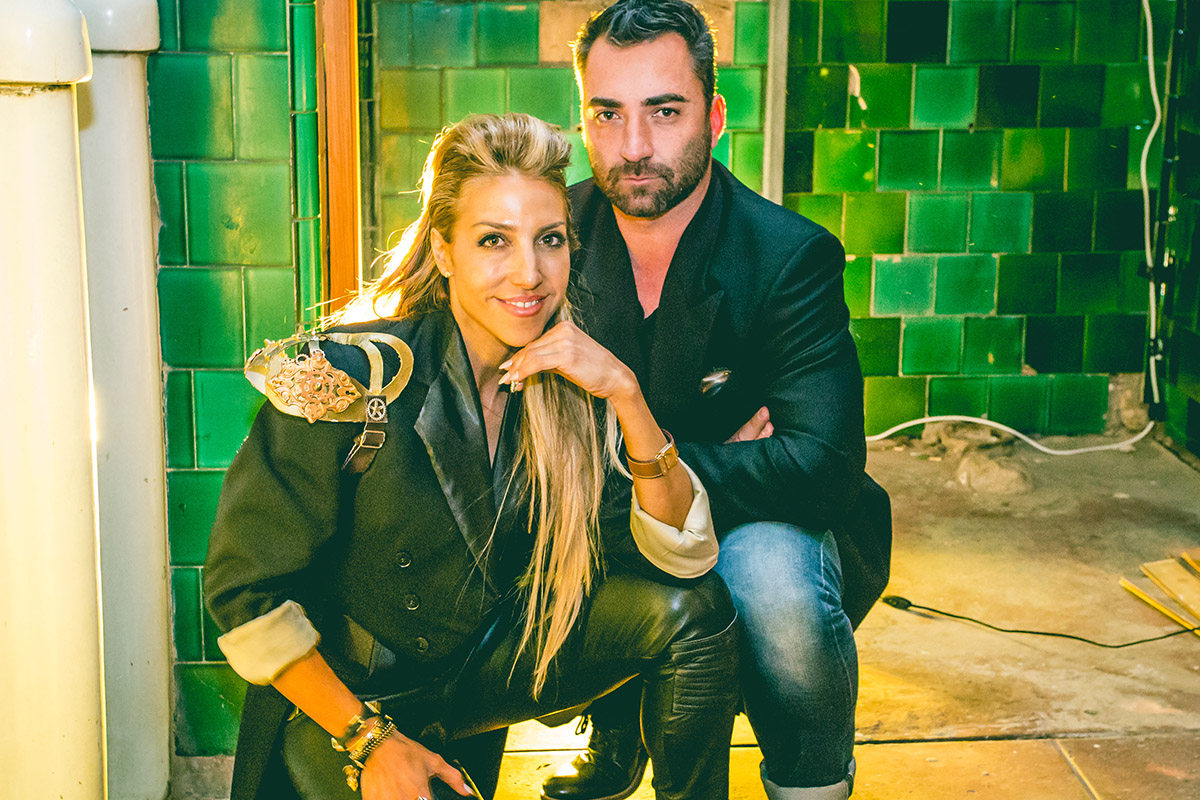
The Newtown Junction development, which has breathed new life into Jozi’s inner city, is arguably the edgiest development Atterbury has ever embarked on, with the restoration and reimagining of heritage buildings happening alongside the modern retail and office development. And who better to entrust with the reinvigoration of the historic Edwardian-era buildings than lifestyle architects extraordinaire Maira and John Koutsoudakis of the Life Group of Companies? We sat down with CEO Maira to get the lowdown on the newly opened Work | Shop | New | Town precinct.
A bit of background: How did it come about that you started working on projects with Atterbury? How many collaborations have you done so far?
Great collaborations come about when common goals merge with like-minded philosophies; Atterbury and the Life Group of Companies now have five leases together! Based on the success of the two Life Grand Cafes in Atterbury’s portfolio, and Life’s design sensibility, Atterbury approached us to design and occupy the prime position of the 1911 Potato Shed, allowing a significant tenant installation as an incentive to attract an establishment of Life’s calibre and foot fall attracting power. I introduced Source’s Trevyn and Julian McGowan to Atterbury and the Newtown Junction development, which effectively became Work | Shop | New | Town.
Have you ever worked on a redevelopment of something with such historical significance?
Over the 15 years of our practice’s history, Life Interiors Architecture & Strategic Design has worked on a number of buildings with serious heritage credentials. Some highlights include the 280-year old coral buildings on the private North Island in the Seychelles which were converted from copra-plantation warehouses into a library and marine and dive centre, and the huge Apprentice penthouse suite in the 1905 National Bank building in Johannesburg for which we won ‘Best Urban Redevelopment’ from the UK’s International Property Awards. On the Greek Aegean island of Serifos, we incorporated three villagers’ houses into one sprawling villa built on the ruins of a 400-year old castle. We’ve also converted a Cape Dutch homestead into conference facilities for the advertising giant, Ogilvy. On Segera, our multi-award-winning project in Kenya, we converted stables on an old ranch in a nature reserve the size of Manhattan, into an art gallery for the Zeitz Foundation.
Tell us about the inspiration for the Potato Shed?
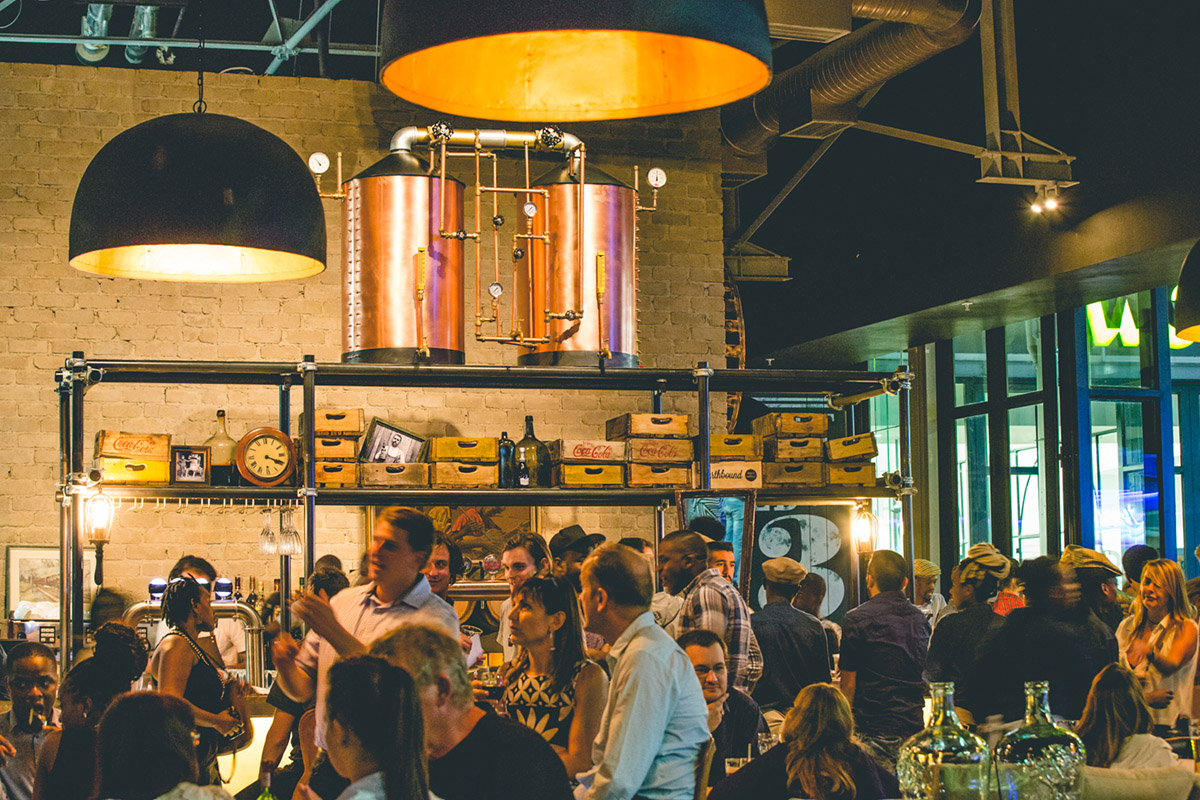
The heritage origins of this 104-year-old building inspired what you see today – the railway tracks, the humble potato, as well as the industrial craft aesthetic of the Potato Shed. This is combined with the influence of the area itself – think Miriam Makeba, Hugh Masekela and the Sophiatown groove. The Potato Shed is in view of the legendary jazz club Kippie’s and looks onto the newly expanded Market Theatre, effectively making it the new cultural heart of Jozi – both for locals and the tourist market keen to uncover the secret spirit of the city.
What historical elements did you retain? Did you face certain restrictions?
We retained the cast-iron roof trusses, steel columns and industrial detailing which were the only remaining features of the Potato Shed.
What are you personally proudest of with regards to this project?
I guess any opportunity to move from success to substance will always be my proudest moment. The opportunity to “be the change you want to see in the world”, to create viable value and investment in the city as part of the urban-regeneration project and the wider R3.1 billion investment which Atterbury has so bravely undertaken in this historical and cultural district of our city.

 We are busy with a number of other exciting projects. We recently purchased the Erasmus land in Pretoria and it is set to become Pretoria’s mini-Waterfall. A master plan for a large mixed-use scheme is in the process of development. We will be developing around 200 000 to 300 000sqm of buildings in the foreseeable future. During the first phase the retail component will be developed, followed by commercial and residential developments.




 Commenting on the development, Louis van der Watt, CEO of Atterbury says: “The Mall of Africa has been designed and developed by Africans and stands proud with leading international retail centres globally. We have created a new shopping experience unlike anywhere else, in which every detail of the mall caters towards understanding and delighting customers.”


 Commenting on the Mall of Africa development, Louis van der Watt, CEO of Atterbury says: “In line with the Atterbury vision to create working, shopping and entertainment spaces for everyone to live to their full potential, the development of this breath-taking shopping and leisure destination introduces an unmissable, unmatched retail experience. Mall of Africa’s exceptional scale, design, location and retail mix places it at the forefront of development.”